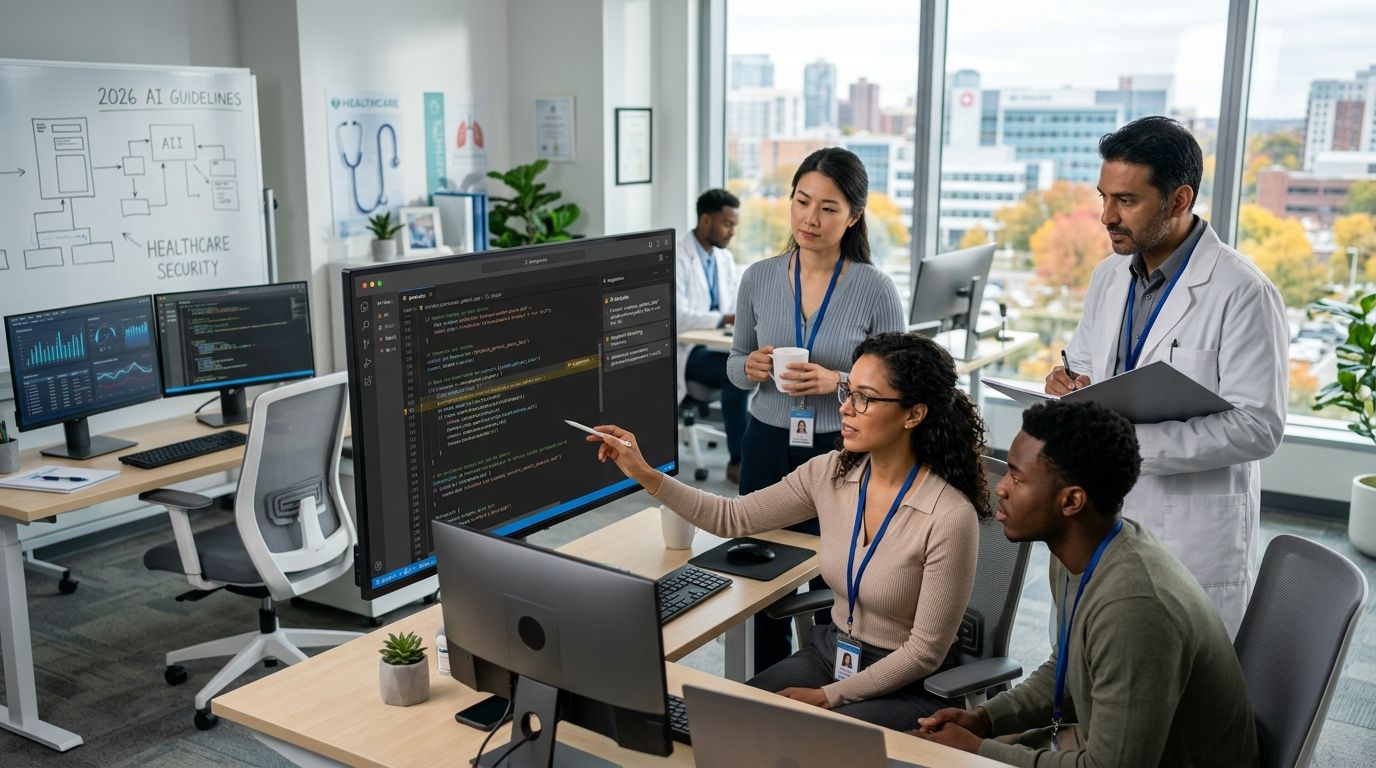
Code review automation for technical leads means running every AI-generated patch through an automated check that separates real code failures from environment or runner noise before a human reviewer spends time on it. Technical leads carry the merge decision, so the check has to produce a plain answer, not a dashboard score they have to interpret under deadline pressure.
- Code review automation for technical leads works when a sandbox runs the patch before and after — not when a linter just scores the diff.
- AdaptOrch produces a readable receipt that separates real code failures from environment or runner failures, with no confidence score attached.
- Manual review still catches architecture drift in 2026; automation catches regressions and false 'tests pass' claims from AI agents.
- Teams merging Cursor, Claude Code, or Codex patches without a run-before/run-after check often mislabel runner failures as code bugs.
Why code review automation matters for technical leads
Technical leads are the last human checkpoint before an AI-generated patch ships. In 2026, most engineering teams run at least one AI coding agent — Cursor, Claude Code, Codex — and the volume of generated patches has outpaced the team's ability to manually re-verify each one line by line.
The problem isn't volume alone. It's that an AI agent will report "tests pass" when the actual failure was a broken runner, a missing environment variable, or a flaky CI step — not the code itself. A technical lead who trusts that claim at face value merges bad diffs or wastes a sprint chasing a bug that never existed. Code review automation tools exist specifically to catch that gap, but most of them still return a score instead of a plain verdict, which leaves the lead doing the interpretation work anyway.
What technical leads need differently from an individual contributor: a check that scales across a team's merge queue, produces the same verdict language every time, and states its own limits instead of pretending to be certain.
Build the review automation workflow
Define what "review" means before you automate it
Most teams skip this step and it costs them later — automation without a defined scope just automates confusion.
- Write down what counts as a real failure (test regression, broken build, logic error) versus environment noise (flaky runner, expired token, missing dependency).
- Decide who signs off on ambiguous cases — usually the technical lead, not the agent.
- Set a baseline: what does your current CI pass rate look like before you touch automation.
- Document the merge criteria your team already uses informally, even if it's just "two approvals and green CI."
Separate runner failures from code failures
This is the single biggest source of wasted engineering hours in 2026 teams running AI agents. A red CI run gets treated as a code problem when the runner itself broke.
- Check runner logs first, not test output, when a build fails unexpectedly.
- Track a rolling count of failures traced back to environment issues versus real bugs.
- Flag any test that failed once and passed on retry — that's a runner signal, not a code signal.
- Run the same patch twice in a clean environment before blaming the diff.
Run the patch in an isolated sandbox before and after
Manual re-runs work for small teams. Once a lead is reviewing patches from multiple agents across multiple repos, the volume makes manual isolation impractical — this is where a dedicated tool like AdaptOrch enters the workflow, running the patch in an isolated sandbox both before and after it's applied and comparing the two states directly instead of trusting the agent's own report.
- Apply the patch through the same harness your CI uses, not a stripped-down test runner.
- Compare pre-patch and post-patch behavior on the exact same environment snapshot.
- Capture the canonical diff, not just the agent's summary of what it changed.
- Preserve the evidence — logs, diffs, run output — so a disputed verdict can be re-checked later.
Read the diff before you read the score
A score tells you nothing about why a patch failed. The diff tells you everything. Technical leads who skip straight to a pass/fail number end up rubber-stamping patches they never actually read.
- Scan the diff for scope creep — did the agent touch files outside the stated fix.
- Check for silently deleted error handling, a common AI pattern when "simplifying" code.
- Look for test modifications bundled into a bug-fix patch — that's a red flag on its own.
- Confirm the diff matches the commit message; agents frequently mismatch the two.
Log a plain-language verdict for every patch
A verdict in words beats a confidence percentage every time, because a number invites false precision. AdaptOrch's receipt states outcomes like "real code failure" or "runner failure — patch not verified" instead of a score, and explicitly marks correctness_claim: false when it can't guarantee the fix is right — it states what it found, not what it believes.
- Standardize verdict language across your team so every reviewer reads the same signal the same way.
- Attach the verdict to the pull request itself, not a separate dashboard nobody checks.
- Require the verdict before merge approval, not as an optional annotation.
- Review verdicts weekly to spot patterns — is one agent consistently producing runner-confused patches.
Set a rejection threshold your team agrees on
Automation without a rejection rule just generates more data nobody acts on.
- Decide in advance: does a "runner failure" verdict block merge, or does it just flag for human review.
- Set escalation rules for patches touching auth, payments, or data migrations — higher bar, always.
- Agree on who overrides an automated rejection, and log every override.
- Revisit the threshold quarterly as your team's trust in the tooling changes.
Audit false positives weekly
A tool that cries wolf gets ignored within a month. Weekly audits keep the signal trustworthy.
- Pull every patch flagged as a "real failure" and confirm it against the actual bug report.
- Track false-positive rate over time, not just in aggregate — some AI code review tools rank by false positive rate and the gap between tools is wide.
- Rotate audit duty across the team so one person isn't the only bottleneck.
- Feed audit findings back into your rejection threshold — tighten or loosen as evidence accumulates.
Verify patches before they merge
See how the sandbox receipt separates real bugs from runner noise.
Comparison: review automation options for technical leads
| Option | Best for | Key limitation |
|---|---|---|
| Manual line-by-line review | Small teams, low patch volume | Doesn't scale past a handful of PRs a day |
| Static analysis / linters | Catching style and syntax issues early | Can't tell a runner failure from a real regression |
| General AI code review tools | Summarizing diffs and flagging risky patterns | Often score-based, no clear pass/fail verdict |
| AdaptOrch sandbox verification | Teams merging AI-generated patches at volume | States what it found, not a correctness guarantee |
Verdict: manual review alone doesn't scale for teams running AI coding agents daily, and static analysis stops at syntax — for technical leads verifying AI-generated patches at volume in 2026, sandbox-based verification that produces a plain verdict is the workflow, not the nice-to-have.
Common mistakes technical leads make
- Treating "tests passed" as ground truth. If the runner itself was broken, a green check means nothing — verify the environment, not just the output.
- Trusting the agent's own confidence language. "This fixes the bug" is a sentence an AI generates whether or not it's true; read the diff.
- Letting one reviewer be the only automation gate. A single point of failure defeats the purpose of automating review in the first place.
- Ignoring flaky-test patterns. A test that fails once and passes on retry is a runner signal your team is misreading as a code signal — see flaky tests vs real bugs before assigning blame.
- Skipping the audit step. Automation that never gets checked for false positives degrades trust across the team within weeks, not months.
FAQ
What is code review automation for technical leads?
It's an automated check that runs an AI-generated patch in an isolated environment and reports whether a failure is a real code bug or an environment/runner issue, so the technical lead doesn't have to manually re-verify every patch before merge.
Is code review automation the same as a linter or static analyzer?
No. Linters catch syntax and style issues but can't tell you whether a test failure came from the code or from a broken runner — that distinction requires running the patch before and after in a sandbox.
How much does AI code review automation cost in 2026?
Pricing varies by tool and team size; check current pricing directly on the vendor's site rather than relying on published figures, which change often.
Does code review automation replace human review?
No. It removes the guesswork around whether a failure is real, but architecture decisions, security judgment calls, and business logic review still need a human, particularly the technical lead.
What's the biggest risk of skipping runner-failure detection?
Teams waste engineering hours debugging a bug that was never in the code — the failure was an environment problem the whole time, and nobody checked before merging.
Can AdaptOrch guarantee a patch is correct?
No. AdaptOrch explicitly does not make a correctness claim; it reports what it observed running the patch in a sandbox, not a guarantee that the fix is right.
How often should a team audit false positives?
Weekly is the practical minimum for teams merging AI-generated patches daily — monthly audits let false-positive patterns compound before anyone notices.
Which AI coding agents need the most review automation?
Any agent generating patches at volume — Cursor, Claude Code, and Codex all produce patches that can pass a broken runner and still get reported as passing, so the agent itself doesn't determine the need, the volume does.
One last thing
The patches that cause the most damage in 2026 aren't the obviously wrong ones — those get caught fast. It's the patch that reports "all tests pass" while the runner silently failed underneath it, because that one looks clean on every dashboard a technical lead checks. The fix isn't a smarter score. It's a receipt that separates the two failure types in plain language, every time, before merge.